
Worldbuilding

Open-world production playbookPlaybook$39.99Coming soon

Runs through Unreal Engine

An open world from a real place, without the lost weeks.

A playbook is production know-how you can follow: a guide for you, skills and scripts for your agent. This one is how we built Colony’s Alpine valleys from real survey data: water that follows the ground, roads that cut and bridge it, forests that fill it, a horizon that holds when you fly. Every trap we paid for, written down.

The film

Eight days, a team of agents, a lot of mountains.

The devlog this playbook is written from. Fourteen minutes, with what worked and what did not.

From Colony’s world

Real valleys, made playable.

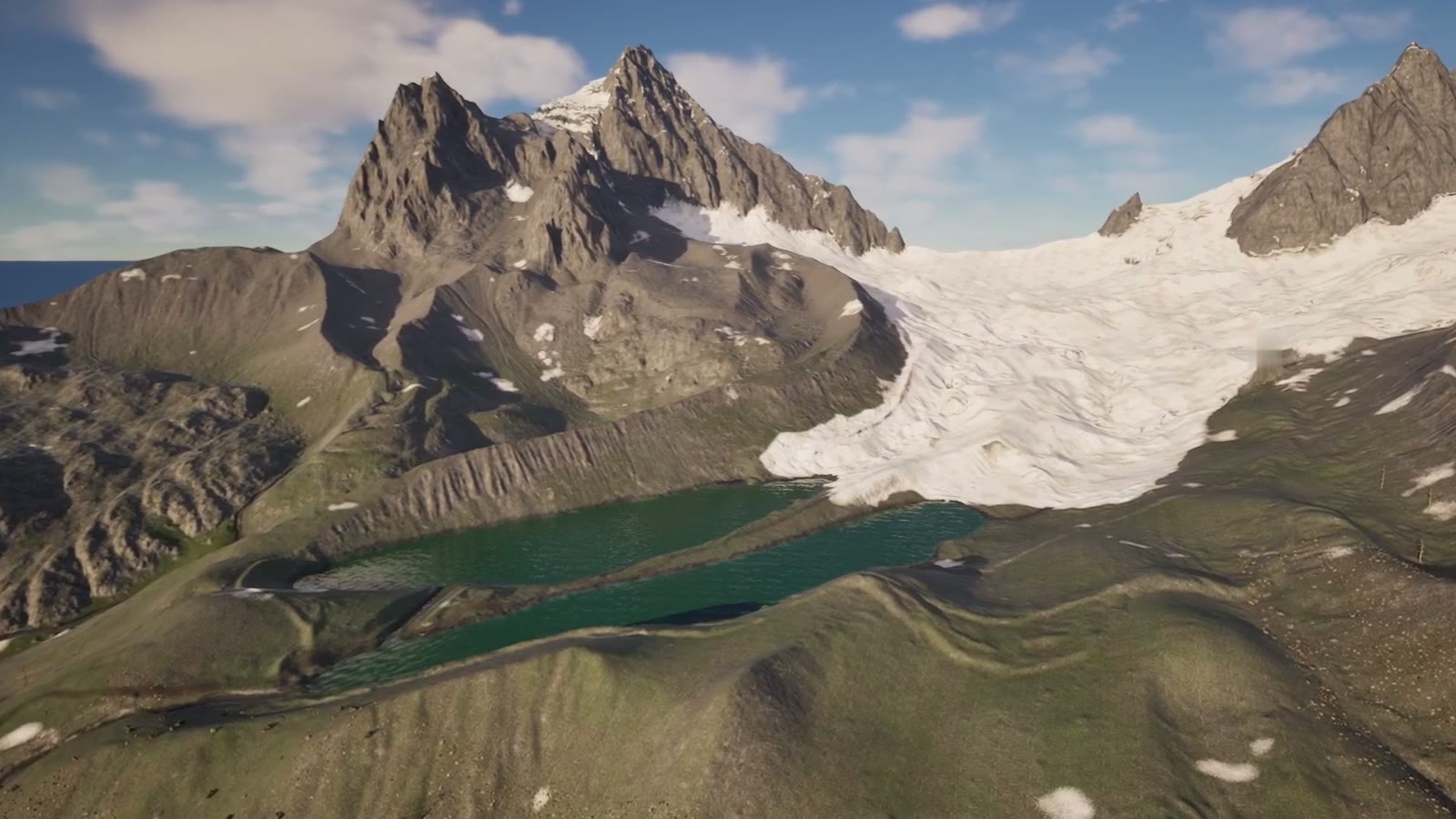
Swiss and French survey data at one metre a pixel. A landscape eight kilometres a side with its lakes and rivers, and roads and forests proven on one-kilometre plots cut from the same data.

The Écrins in the French Alps: real terrain, laser-scanned at one metre a pixel.
WaterRivers routed down every valley of a real region.
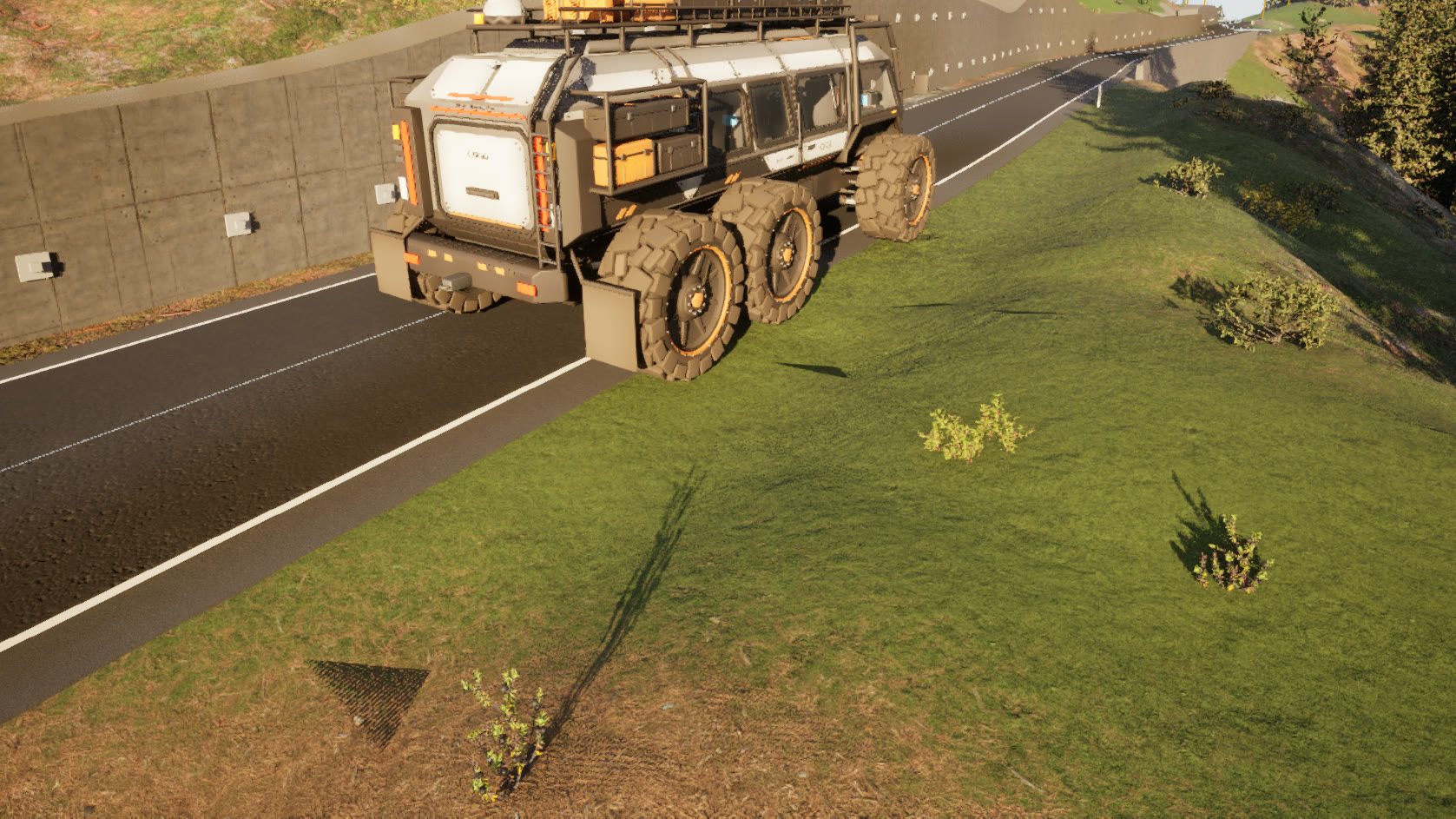
A six-wheeled rover on an asphalt road beside a concrete retaining wall cut into a hill
RoadsA road that keeps its own line and cuts the hill, with a wall to hold it.
Ground coverA meadow filled by rules, with no ring of grass popping in round you.

What you learn to do

Open-world production playbook

Build it in the order that works.

Ground, then water, then everything that grows.

Each layer reads the one before it. Water is derived from the terrain. Roads cut the terrain and cross the water. Forests and grass read all three. Change the order and you rebuild twice. This is one camera move up a valley, recorded three times.

  1. 1

    The ground

    Real elevation, brought in tile by tile and never loaded whole.

  2. 2

    Water

    The river routed down the valley and carved into the bed it runs in.

  3. 3

    Forest

    Trees baked ahead of time, grass grown live, both reading the ground and the water.

Open-world production playbook

Water that follows the ground.

The terrain decides. The water is derived from it.

Rivers are routed and carved offline, from the same data as the heightmap, so bed and water match by construction: never uphill, never deeper than they must. Streams too narrow for the landscape grid become their own meshes. And the reason a real lake can render as nothing at all, with no warning: its outline runs the wrong way round.

The basinIts lake
Open-world production playbook

The canyon that should not exist.

A trap, shown as it happened.

Real survey data has tunnels in it. Our first rivers followed one and carved a canyon straight through a mountain. Bojan took one look: “that canyon is totally off.” Now a river knows when to stay underground. The same pass lists every place the water drops three metres or more, 78 on our big map: waterfalls, found by the data. The playbook is built from moments like this one.

Open-world production playbook

Roads that belong to the land.

The road is its line, and everything works outwards from it.

A road never bends to fit the ground. Lower ground gets a cut and walls, ground far below a viaduct, a stream a culvert, a hill a tunnel. The ground edits under it must be continuous ramps hidden under the structures, or the landscape breaks into teeth. And the grass has to read the road as built: ours first read a rough survey line, and almost half of a new road was lawn.

Cut and wallsWhere the hill stands higher than the road.
ViaductWhere the ground falls far below it.
Open-world production playbook

Meadows and forests that hold up in play.

Filled by rules, judged where the player stands.

Ground cover, trees and rocks come from procedural graphs that read the terrain. The guide holds the settings that cost us days: grass that glows lime, grass that vanishes the moment you press play, whole patches fading together, and a player falling through generated meshes that look solid and have no collision. Our first forest ran at 30 frames a second. Baked trees took it to 60.

Open-world production playbook

A horizon that holds when you fly.

The whole map visible, without loading the whole map.

A streamed world shows very little of itself until its distant versions are set up right, and the editor shows all of them whatever you do, so you can only judge in play. Two rows of distant versions, tiled, never one mesh for the whole map. Built from the command line with the editor closed.

1 km

How much terrain our eight-kilometre level showed in play with the settings a new level gets.

16 km

The range of the far row that fixed it: always there on a map this size. 512 tiles, 200 MB.

24 → 59 GB

What the editor’s memory did when we set this up in a live editor instead of from the command line.

Open-world production playbook

Work small, build big.

Fast choices by day, heavy builds overnight.

The look is decided on a small copy where everything fits in the editor and you can judge by eye. Then it is built into the big world from the command line. Heavy rebuilds wait for one overnight run, each with a memory guard. The landscape is never loaded whole.

What is inside

What is in the playbook.

Production knowledge from building our own world, cut down from about 150 written reports and a notebook of 2,000 lines. Every step works by hand; the skills let an agent run the long parts.

01

The production guide

From choosing a place to flying over the finished world: terrain, water, roads, ground cover, streaming and the horizon, in the order that works.

02

The water chain

Route rivers down the terrain, carve the beds into the heightmap, and bring lakes and rivers into the level with their surfaces matching. With the checks that must print zero.

03

Headless builds

Landscape, procedural layers and distant versions built tile by tile from the command line, with scripts that fail loudly when a save did not happen.

04

Settings that work

Streaming cells and ranges, the two distant rows, landscape layers, foliage and collision settings we measured, as values you can copy.

05

Agent skills

How an agent runs long builds without wedging the editor: timeouts, memory guards, one overnight queue, and when to stop and ask.

06

The trap list

Every failure that cost us an evening, with its symptom, its cause and the fix. The canyon is one of them.

What it needs

Unreal Engine 5.8

With World Partition, Water and PCG, all part of the engine.

Terrain

From TerrainForge, from public elevation data, or from any tool that writes a heightmap.

A good machine

Ours has 64 GB of memory and a 16 GB graphics card. The guide keeps a whole world inside that.

Works best with

TerrainForge, the PCG kit, and the roads, rivers and trails kit.

Price

$39.99

Paid, bought once. It is the know-how behind our own world; the tools and kits it uses are sold, or free, on their own.

Coming soon. Where to get it, once it is out:

In the Hub

Once it is out, the free Hub installs Open-world production playbook, keeps them up to date, and gets new versions to you first.

Bought once, updated until 2.0

Buy before version 2.0 and it is yours to keep, with every update until 2.0: early access, beta, 1.0, up to 1.99. Version 2.0 is the first paid upgrade, discounted for owners.

Questions

Asked before you start.

What is a playbook?+

Production know-how, packaged so you can follow it: a guide for you, and skills and scripts an agent can run. It has no window of its own, so this page shows what was made with it.

Is it written yet?+

Not as a guide. The knowledge exists as our own notes, scripts and reports from building these levels, and the playbook is being edited from them. The film above is the honest summary until then.

Is your eight-kilometre world finished?+

No. Its terrain, lakes and rivers are in, and its horizon was proven at that size. Roads and forests were built and tested on one-kilometre plots and a two-kilometre copy. Stitching it all into the big map is the next step.

Is it only for real places?+

No. A real place is where we started, so you can tell when it looks wrong. The method needs only a heightmap.

Does it include the roads or the forests?+

No. The roads, rivers and trails kit and the PCG kit are their own products. This playbook is how to put a whole world together with them, and what to watch for at that scale.

What is not covered?+

Console performance: we aimed at an RTX 3080 at 1440p, and a few hitches remain when a new piece of the world loads. Railways, towns and full road networks come later.

Do I have to use AI?+

No. Every step works by hand. AI and agents are there when you want a first draft or want the repetitive work done for you.

What does it cost?+

You start with the free tools. Some tools, add-ons and kits are paid, and you see the price before you buy. Pro, for teams, is a subscription.

Can I ship what I make in a commercial game?+

Yes. What you make is yours. AI providers have their own terms, and each add-on that uses one says which.

Which version of Unreal do I need?+

Unreal Engine 5.8.

A whole world, without losing the weeks we did.