Characters

Garment production playbookPlaybook$39.99Coming soon

Runs through Marvelous Designer

Outfits that layer, move and fit every body.

The production half of dressing a game cast: garments that go over and under each other on their own, cloth that swings without costing a frame, one fit for every body shape, and fabric that looks the same on every piece. Taken from what we learned dressing our own game.

Made with Garment production playbook

One suit, five looks, every body.

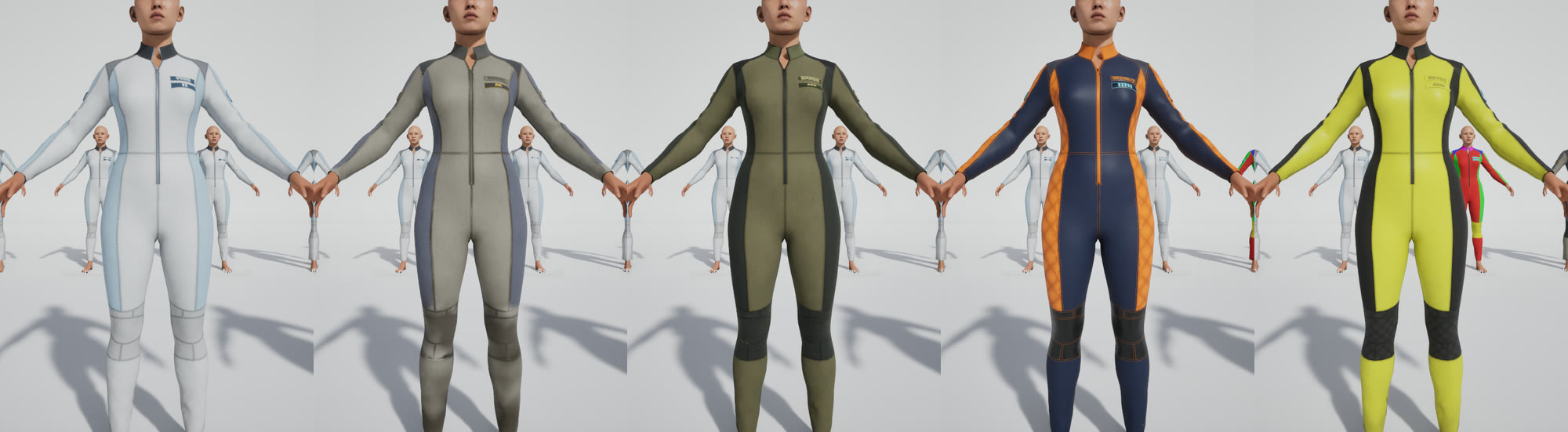
One garment and one master material. The look, the badge, the rank and the name are settings on the wearer, not new meshes.

The same suit in five looks side by side: clean white, worn grey, military green, navy and orange, yellow deck crew
Clean cryo, worn work, military, void pilot and deck crew: the same mesh and the same material, five looks.
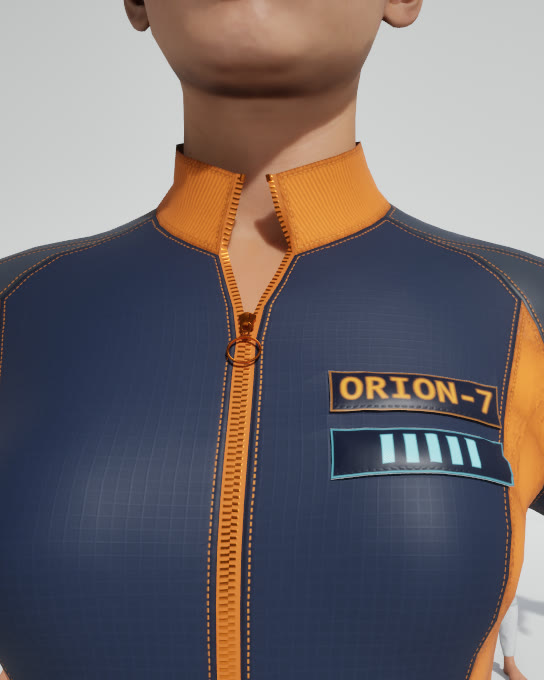
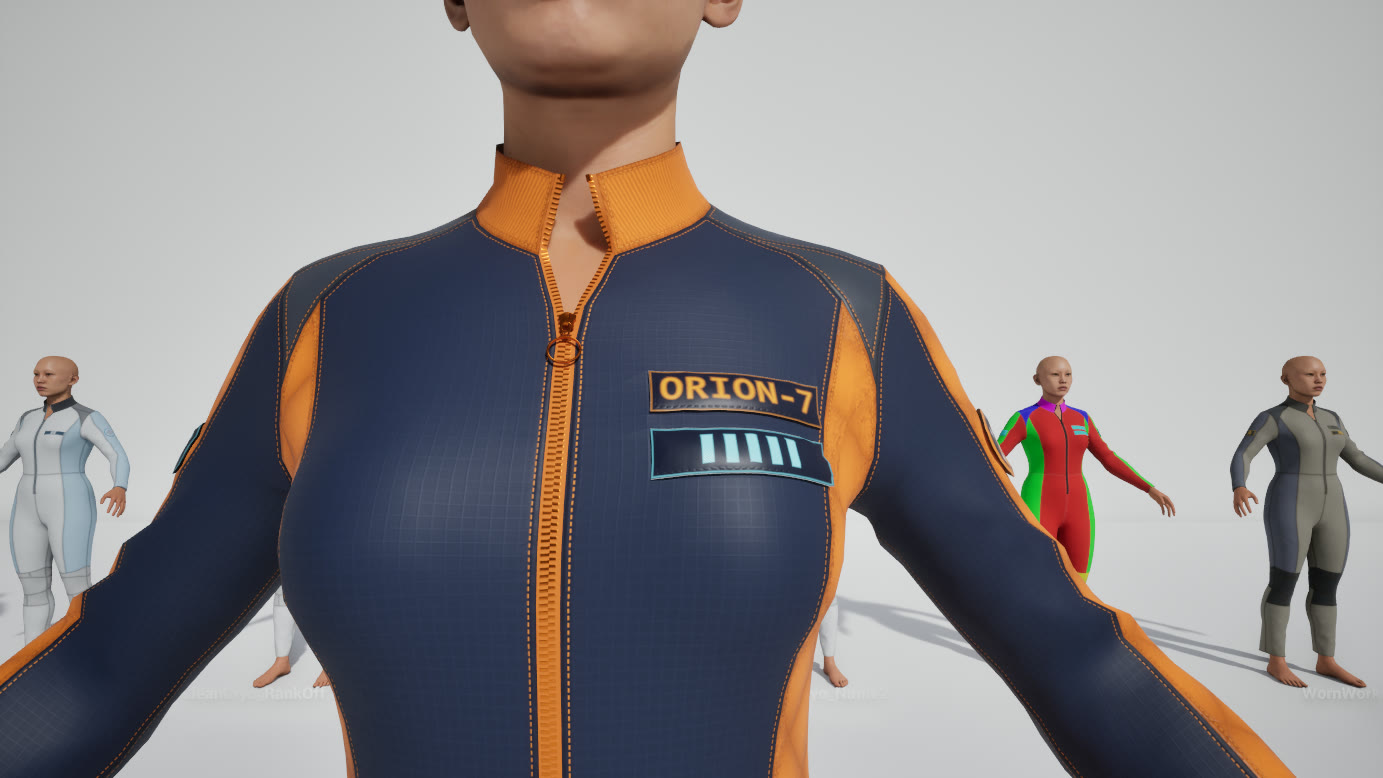
Close-up of the flight suit’s chest: stitched panels, a zip, a name tape reading ORION-7 and a rank bar
DetailName and rank are typed in, not painted: one material makes every crew member’s tape.
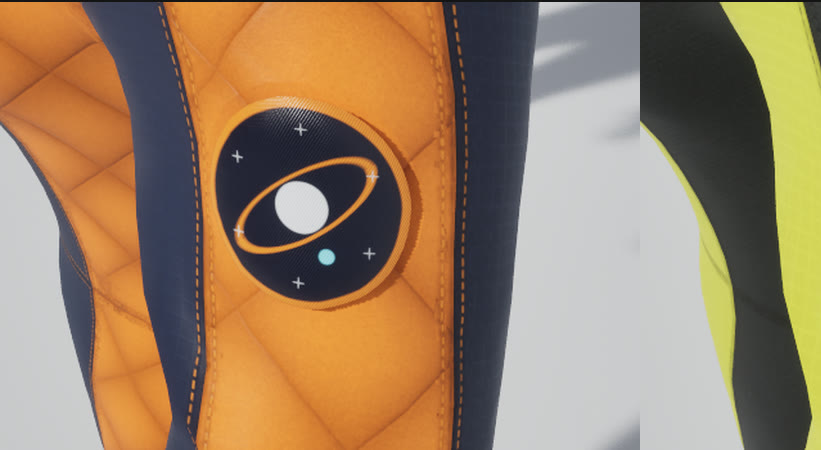
An embroidered round badge on a quilted orange sleeve
BadgesEmbroidered badges, with thread relief that catches the light.
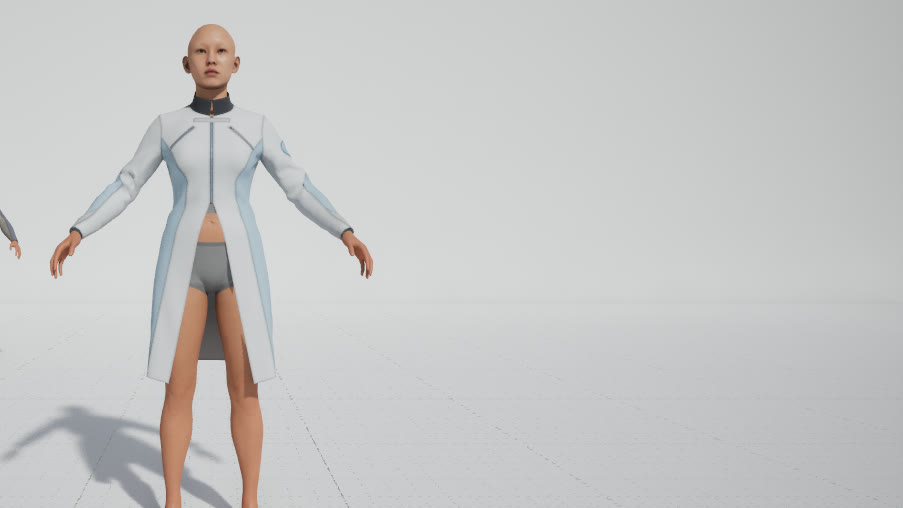
A long coat fitted on a character, standing in a test level
LayersA coat built to go over the suit, fitted on its own.

What you learn to do

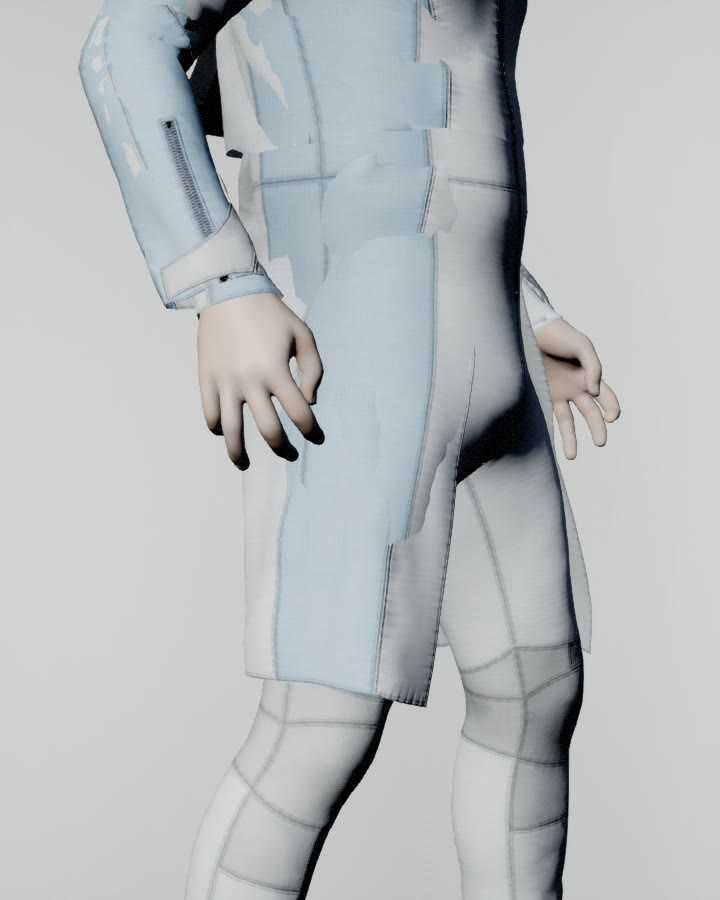
A coat worn over a white suit on a broad male body, seen from the side
Garment production playbook

Layers that sort themselves out.

Every garment fitted alone, given a number, combined in play.

A garment never knows what it will be worn with, so it is fitted on the bare body only, and carries a layer number. Boots are 1, the suit 2, military boots 3: combine them and the higher one goes over, with nothing baked into either shape. The order is solved only when what is worn changes, never every frame, and switched off at a distance.
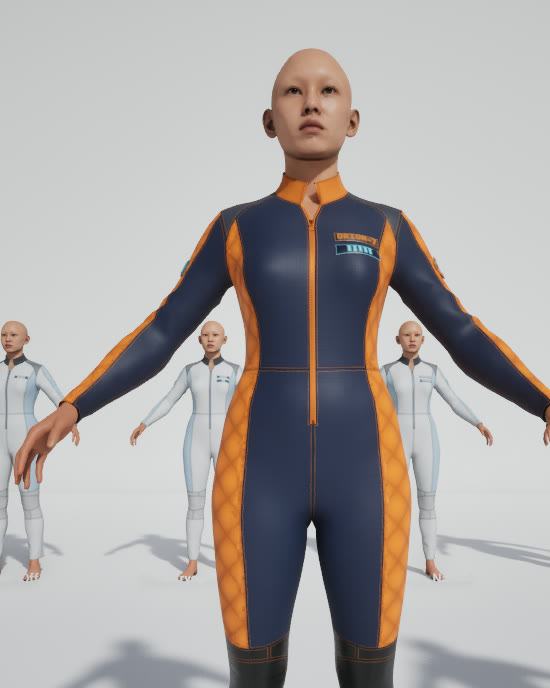
A full flight suit on a character in a line-up of suited characters
Garment production playbook

Slots for clothes, not for skin.

A coat never hides the suit under it.

Skin keeps its own slots. Garments get theirs: base, top, bottom, outer, shoes, gloves and vest. A garment hides the skin it fully covers, and a mask per item hides the rest, in Epic’s own hidden-face format, so trousers, boots and a coat each bring their own. A garment never hides another garment: the layer number decides.

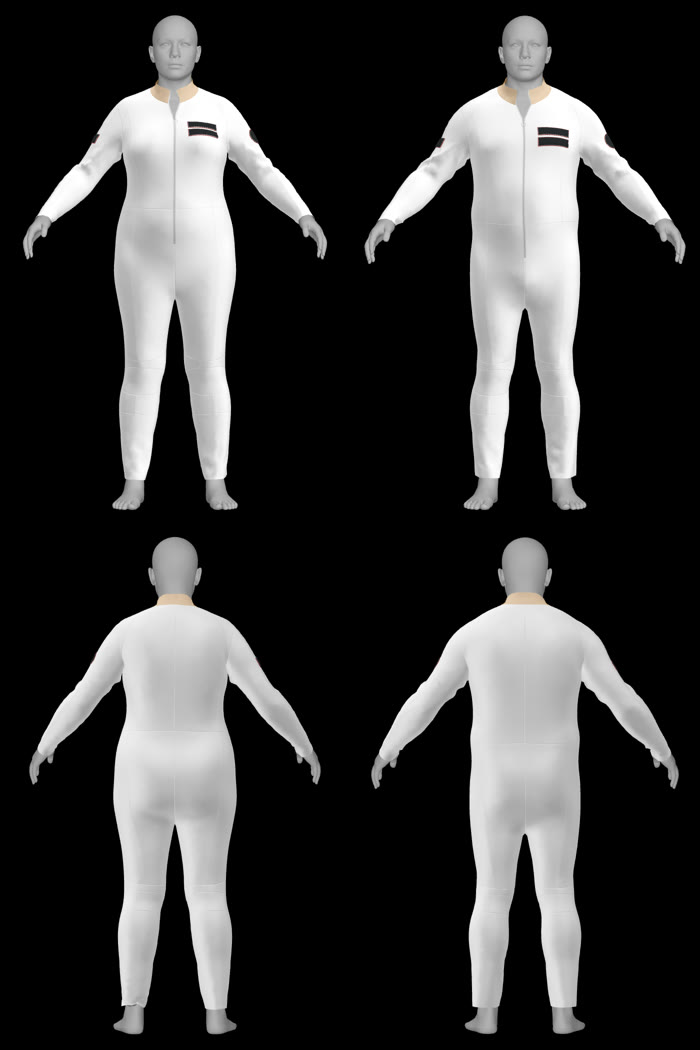
The same suit on a heavy body and a broad male body, front and back
Garment production playbook

One fit for every body.

Not a mesh per character.

Fit the garment to a few reference bodies, turn the difference into shapes, and let every other body blend between them. On bodies it was never fitted to, our suit, shirt and chest plate stayed within 1.3 cm of Epic’s own fit at their worst point. The playbook covers both routes: fitting in Marvelous Designer per body, and the shapes that fill in between.

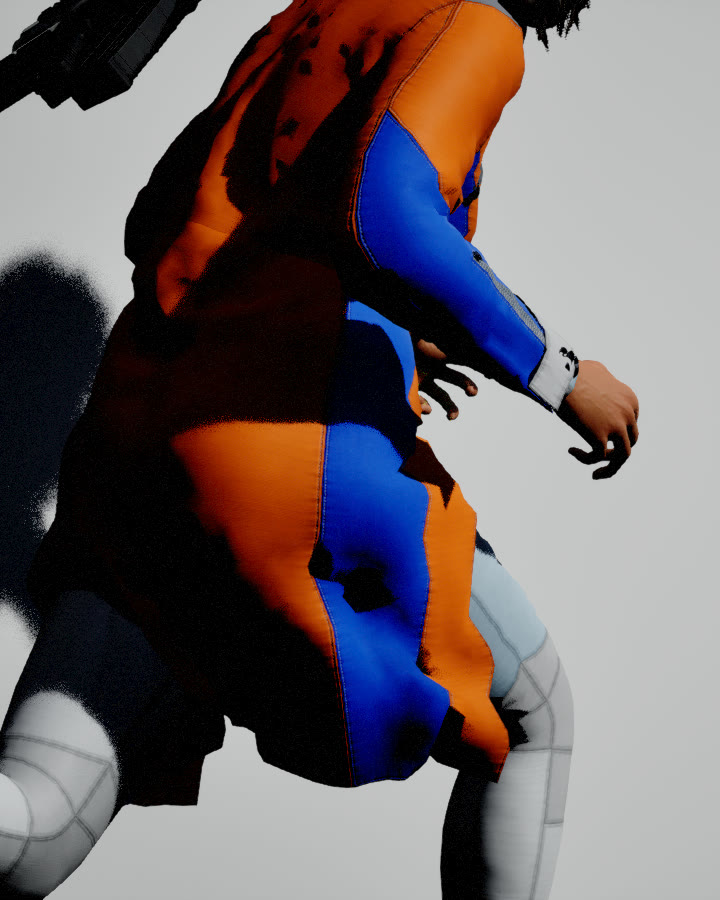
A running character whose coat tail swings out behind, shown in orange and blue fabric-ID colours
Garment production playbook

Cloth that swings, cheaply.

A light mesh moves, the detailed one follows.

Only the part that moves is simulated, on a simplified mesh of 300 to 400 vertices, and the full garment follows it. Each wearer gets the tail shaped to their own body and collides with their own body, not the player’s. Tuned so the tail trails behind at a run and lifts on a jump, instead of following the legs like trousers. Shown here in its fabric-ID colours.

The chest of the flight suit, with even stitching and a fine weave
Garment production playbook

The same cloth, the same size.

Measured per garment, not guessed.

Garments that share a material must show the weave at the same scale. Each garment’s centimetres of cloth per UV unit is measured from its own export and set on its material. Our coat first came out with its fabric five times too big, and nobody noticed until it stood beside the suit.

What is inside

What is in the playbook.

Production knowledge, curated from three months of real work on our own cast. Every step works by hand; the skills let an agent do the repetitive part.

01

The production guide

Layering, slots and masks, fitting across bodies, simulated cloth and fabric scale, with the numbers we measured and the traps we paid for.

02

Layer and mask tools

Measure each garment alone on every reference body, and write its layer tables and its body and head masks.

03

The multi-body fit

Fit one garment to each reference body in Marvelous Designer, then turn the fits into shapes the game blends.

04

The simulated-cloth recipe

Strip, simplify and export the moving part, build one cloth asset with a shape per body, and the tuning that made our tail behave.

05

Fabric scale and looks

The UV size measurement, and the way one master material carries looks, badges, names and ranks.

06

Agent skills and checks

Skills for each stage, and the validators that caught our own mistakes, such as a tail bound five centimetres too low.

What it needs

The Marvelous Designer playbook

The free playbook comes first: this one starts where a garment is already in your game.

Unreal Engine 5.8

With Chaos Cloth for the simulated parts.

Marvelous Designer 2026

Your own licence, for fitting to several bodies and exporting the cloth.

A family of bodies

MetaHumans today. Any character standard whose bodies share one mesh layout works the same way.

Price

$39.99

Paid, bought once. It is the know-how behind our own cast, on top of the free Marvelous Designer playbook.

Coming soon. Where to get it, once it is out:

In the Hub

Once it is out, the free Hub installs Garment production playbook, keeps them up to date, and gets new versions to you first.

Bought once, updated until 2.0

Buy before version 2.0 and it is yours to keep, with every update until 2.0: early access, beta, 1.0, up to 1.99. Version 2.0 is the first paid upgrade, discounted for owners.

Questions

Asked before you start.

Does this replace Epic’s Mutable?+

No. Mutable already builds layered, reshaped characters, and when you want one merged mesh with continuous body shapes it is the right tool. This playbook works beside it: per-item garments in your game’s own equipment slots, faces kept separate, simulated parts, and masks in Epic’s own format. The guide says which to reach for when.

What does it cost at run time?+

Layering is solved when what someone wears changes, not every frame. What runs every frame is the same morph pass fit shapes already use: we measured 0.015 to 0.034 ms per character, and it switches off at a distance.

What is not proven yet?+

We have run it on our player and some of the reference bodies, not on crowds of characters at once, and not in a packaged build. Loose garments such as long skirts are next. The guide marks every step by what we have measured and what we have not.

Does it only work with MetaHuman?+

It is built and measured on MetaHumans. The method needs only a family of bodies that share one mesh layout, so Reallusion characters can follow the same way.

Do I need Narrative Pro?+

No. Our game uses it, so the guide shows that set-up too, but slots, layers and masks are ideas any equipment system can use.

When can I get it?+

It is coming. Leave your email and you hear the day it is out.

Do I have to use AI?+

No. Every step works by hand. AI and agents are there when you want a first draft or want the repetitive work done for you.

What does it cost?+

You start with the free tools. Some tools, add-ons and kits are paid, and you see the price before you buy. Pro, for teams, is a subscription.

Can I ship what I make in a commercial game?+

Yes. What you make is yours. AI providers have their own terms, and each add-on that uses one says which.

Which version of Unreal do I need?+

Unreal Engine 5.8.

Dress a whole cast, not one character at a time.